
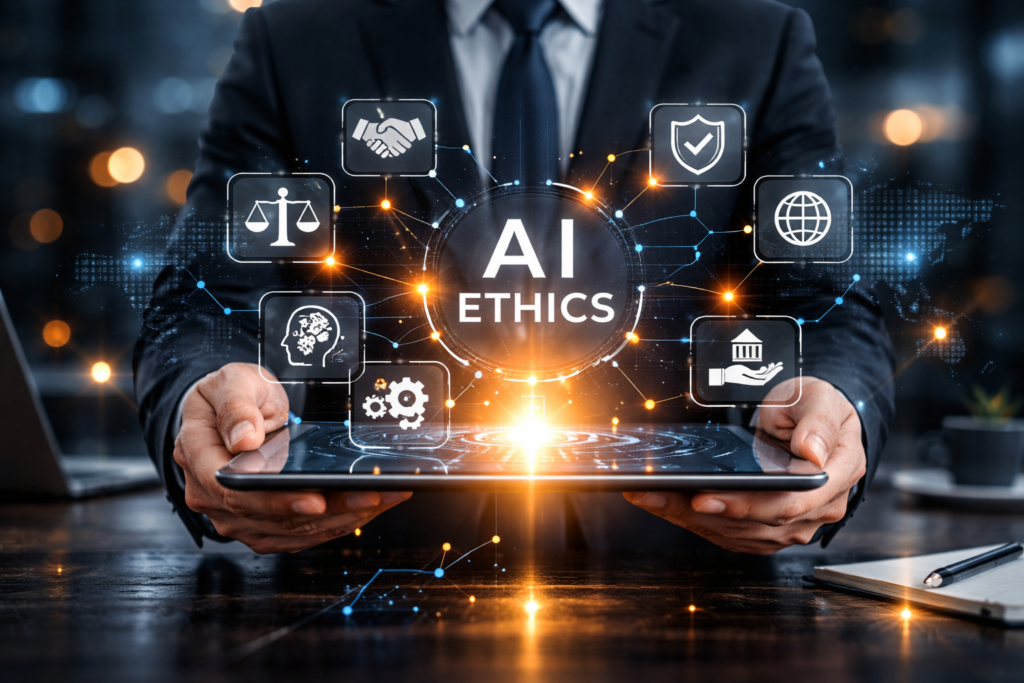
Artificial intelligence is rapidly becoming a core part of modern businesses and everyday life. From personalized recommendations to automated decision-making, AI systems are influencing how organizations operate and how users interact with technology. However, as adoption grows, so does the responsibility to ensure that these systems are ethical, transparent, and trustworthy.
Responsible AI is the approach that ensures artificial intelligence is developed and used in a way that aligns with human values, legal standards, and societal expectations.
What Is Responsible AI
Responsible AI refers to the practice of designing, developing, and deploying AI systems with a strong focus on ethics, accountability, and transparency. It ensures that AI technologies are not only efficient but also fair and safe for users.
It combines technical innovation with ethical responsibility, making sure that AI systems serve people without causing harm.
Why Responsible AI Is Important
AI systems have the power to influence critical decisions across industries. Without ethical considerations, these systems can create unintended consequences.
Responsible AI is important because it:
- Builds trust among users and stakeholders
- Reduces risks of bias and discrimination
- Ensures compliance with regulations
- Protects user privacy and sensitive data
- Enhances long-term sustainability of AI systems
Organizations that adopt responsible AI practices are better positioned to scale and innovate confidently.
Key Pillars of Responsible AI
1. Fairness
AI systems should treat all individuals equally. This requires eliminating biases in data and algorithms to ensure unbiased outcomes.
2. Transparency
Users should understand how AI systems function and make decisions. Clear explanations improve trust and accountability.
3. Accountability
Organizations must take ownership of their AI systems. This includes monitoring performance and addressing any issues that arise.
4. Privacy and Security
Responsible AI ensures that user data is handled securely and ethically, following global data protection standards.
5. Reliability and Safety
AI systems should perform consistently and avoid errors that could lead to negative consequences.
6. Human Control
AI should support human decision-making, not replace it entirely. Human oversight ensures ethical alignment at all times.
Challenges in Implementing Responsible AI
While the concept is widely accepted, implementation remains complex.
Data Bias
AI models rely on historical data, which may contain biases. This can lead to unfair outcomes if not properly managed.
Lack of Explainability
Some AI systems operate in ways that are difficult to interpret, making it challenging to ensure transparency.
Regulatory Gaps
AI is evolving faster than regulations, creating uncertainty for businesses.
Ethical Complexity
Certain AI applications involve difficult decisions where ethical boundaries are not clearly defined.
How Businesses Can Adopt Responsible AI
To build ethical AI systems, organizations should:
- Develop clear ethical guidelines
- Use diverse and high-quality datasets
- Conduct regular audits of AI models
- Implement explainable AI techniques
- Train teams on ethical AI practices
- Stay aligned with evolving regulations
Taking these steps helps create systems that are both innovative and responsible.
The Future of Responsible AI
Responsible AI is expected to become a standard rather than an option. Future developments will focus on:
- Stronger global AI regulations
- Increased use of explainable AI models
- Ethical considerations integrated into development processes
- Greater collaboration between industries and policymakers
- Human-centered AI design
Businesses that embrace responsible AI early will gain a significant competitive advantage.
Conclusion
Responsible AI is essential for building trust, ensuring fairness, and driving sustainable innovation. As AI continues to evolve, organizations must prioritize ethical practices to create systems that benefit both businesses and society.
By focusing on transparency, accountability, and human values, companies can unlock the full potential of AI while minimizing risks.